
Dry eye care · Buitique Optometry
When your eyes burn, feel gritty or water throughout the day, eye drops may provide only part of the answer. Understanding your eyelid health and tear film can help explain why symptoms keep returning.
Low-level light therapy (LLLT) is a non-invasive, light-based approach being studied for dry eye associated with meibomian gland dysfunction. Here is what to know about the technology and the iLight LLLT Pro device pictured here.
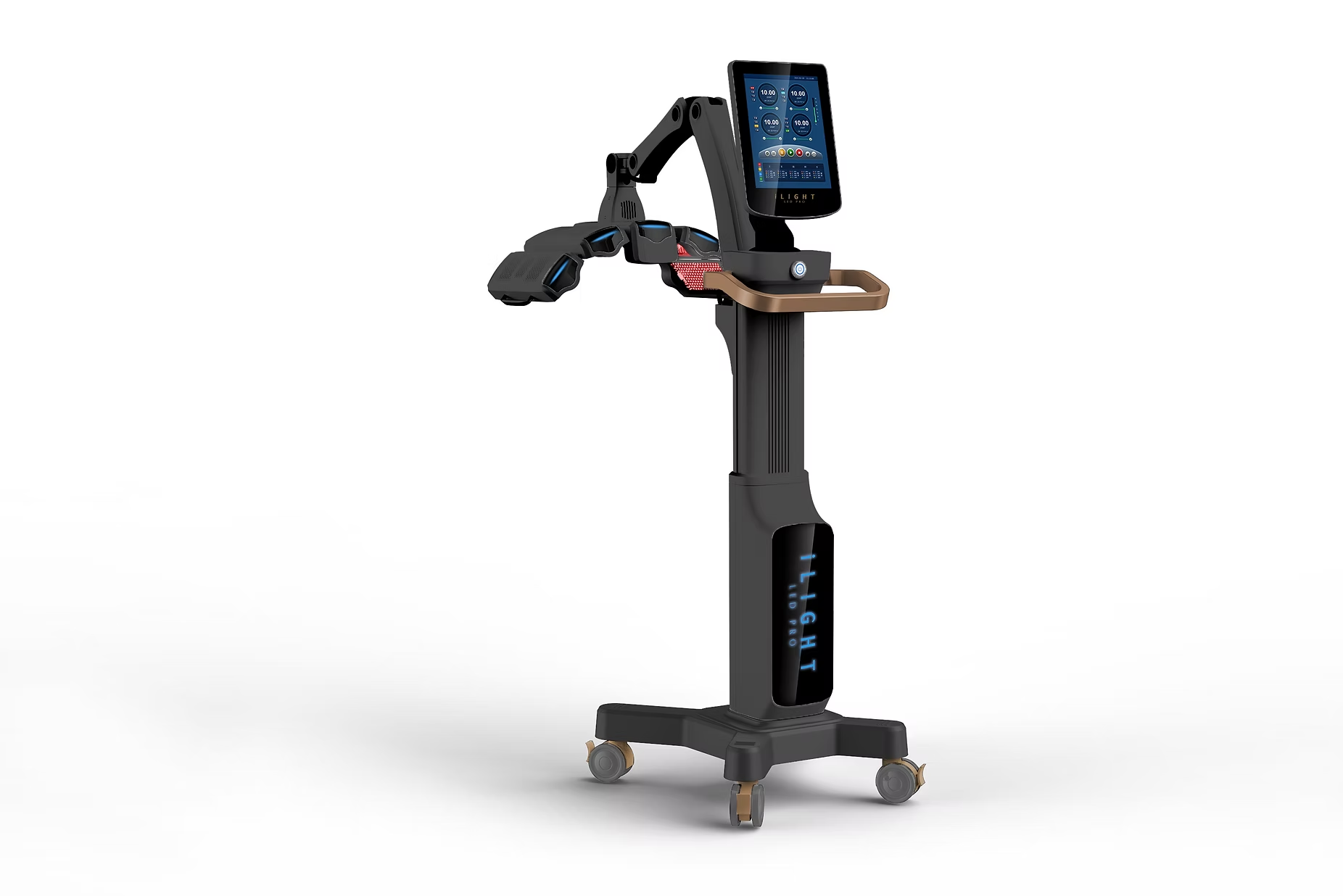
Product image: Optometric Aesthetics.
What is LLLT?
In dry eye care, LLLT stands for low-level light therapy, often called photobiomodulation. It uses light-emitting diodes (LEDs), with red light commonly studied for this purpose. It does not involve an incision or an injection.
Researchers are investigating how controlled light exposure affects cellular activity and the tissues around the eyelids. Treatment settings and delivery systems matter: findings from one device or protocol cannot automatically be applied to every light therapy product.
Why the eyelid oil glands matter
Your meibomian glands produce the oily part of your tears. That oil helps slow evaporation. When the glands become blocked or do not release oil normally—a condition called meibomian gland dysfunction (MGD)—the tear film can become unstable.
Dryness, burning, a sandy sensation, fluctuating vision and even excessive watering can occur. An examination helps determine whether MGD, reduced tear production, allergies or another problem is contributing to your discomfort.
How may light therapy help dry eye?
Clinical studies suggest that LLLT may improve certain dry eye symptoms and measures of ocular surface health in selected patients. A small randomized, placebo-controlled trial found improvement in some measures, including corneal staining, while several other outcomes did not differ significantly between groups. Read the 2022 trial.
A 2025 study comparing LLLT alone with combined IPL and LLLT found improvements in symptom frequency in both groups, with some additional benefits from combined treatment. It involved only 24 participants, so larger studies and longer follow-up remain useful. Read the 2025 study.
These findings support a conversation about LLLT as an option within a personalized care plan. They do not establish a permanent cure, guarantee relief or prove that every device produces the same results.
Meet the iLight LLLT Pro
The iLight LLLT Pro from Optometric Aesthetics is an LED light therapy system with an adjustable treatment head and touchscreen controls. The manufacturer describes adjustable light intensity, treatment duration and wavelength combinations. Your clinician determines which settings, treatment areas and precautions are appropriate for your care.
The studies linked above examine LLLT approaches; they should not be read as clinical trials of this specific iLight model.
How is LLLT different from IPL?
LLLT delivers LED light, while intense pulsed light (IPL) uses controlled pulses of broad-spectrum light. They are distinct technologies with different treatment protocols and safety considerations. A provider may consider one or both depending on your examination and medical history.
Learn more in our article on IPL for dry eye and eyelid health.
What to expect from your evaluation
At Buitique Optometry, your dry eye evaluation is the starting point. We assess your symptoms, eyelids, tear film and ocular surface before discussing treatment options.
If light therapy is recommended, ask about the proposed schedule, expected benefits, possible side effects, eye-protection measures and follow-up. Tell your provider about light sensitivity, medications and recent eye procedures. The number and timing of sessions depend on the chosen protocol and your response.
LLLT may be considered alongside lubricating drops, eyelid care, gland expression or other prescribed treatments. Continue your existing care unless your eye doctor advises a change. Consumer red-light panels and cosmetic masks are not substitutes for a professionally selected eye-care protocol.
Explore a plan for more comfortable eyes
Persistent dryness deserves a closer look. Contact Buitique Optometry to discuss LLLT, current availability and the options that fit your diagnosis.
Call or text 858-531-8541
5020 Baltimore Drive, Suite B · La Mesa, CA 91942
Further reading: Randomized LLLT dry eye trial (2022) · Stand-alone LLLT study (2024) · LLLT versus combined IPL and LLLT trial (2025) · iLight device information
This article provides general education. An eye examination is needed to diagnose symptoms and determine treatment suitability.